Davor Kondic

Welcome to my Projects Portfolio site! I built this site personally with Github Pages to showcase some of my personal projects and my full stack data science skills. Here you will find the front end or user interface of each project and will be able to interact and use it directly within the site. For more information like source code or dashboard workbooks please visit one of my Tableau, Github, or Huggingface repos listed below.
View my LinkedIn Profile
View my Tableau Public Profile
View my HuggingFace Profile
Projects
Machine Learning
ML API
A FastAPI enpoint serving a fitted sklearn pipeline with an ordinal logistic regression model using the Mord Python Package to predict customer’s “small quantity order importance ranking (1-10).”
Pipeline Steps
- Column Transformer
a. Standard Scaling for numerical variables
b. One-hot-encoding for categorical variables - Feature Selection
a. Lasso Regression - Model
a. Mord Ordinal Logistic Regression
The fitted pipeline is then serialized with joblib, served with Fast API (Uvicorn), containarized with Docker, and finally deployed to HuggingFace Spaces.
Prediction requests can be sent to https://dkondic-ml-api.hf.space/predict as a list of dictionaries where each dictionary is an instance to predict. Thus, prediction is possible for single instance or batch of instances. Please see ML API Docs and Source Code for more indormation.
Request Body
[
  {
    "CUST_NBR": "string",
    "MENU_TYP_DESC": "string",
    "PYR_SEG_CD": "string",
    "DIV_NBR": "string",
    "WKLY_ORDERS": 0,
    "PERC_EB": 0,
    "AVG_WKLY_SALES": 0,
    "AVG_WKLY_CASES": 0
  }
]
Resonse Body
{
  "prediction": [
    0
  ]
}
Prediction example using Python requests
import requests

data = [
        {"CUST_NBR":"1111",
         "MENU_TYP_DESC":"MEXICAN",
         "PYR_SEG_CD":"Education",
         "DIV_NBR":"20",
         "WKLY_ORDERS": 15,
         "PERC_EB":0.80,
         "AVG_WKLY_SALES":2656.04,
         "AVG_WKLY_CASES":67.00}]

response = requests.post("https://dkondic-ml-api.hf.space/predict", json=data)
print(response.json())





Data Visualization
Bokeh Web Applications
Real Time Data Streaming
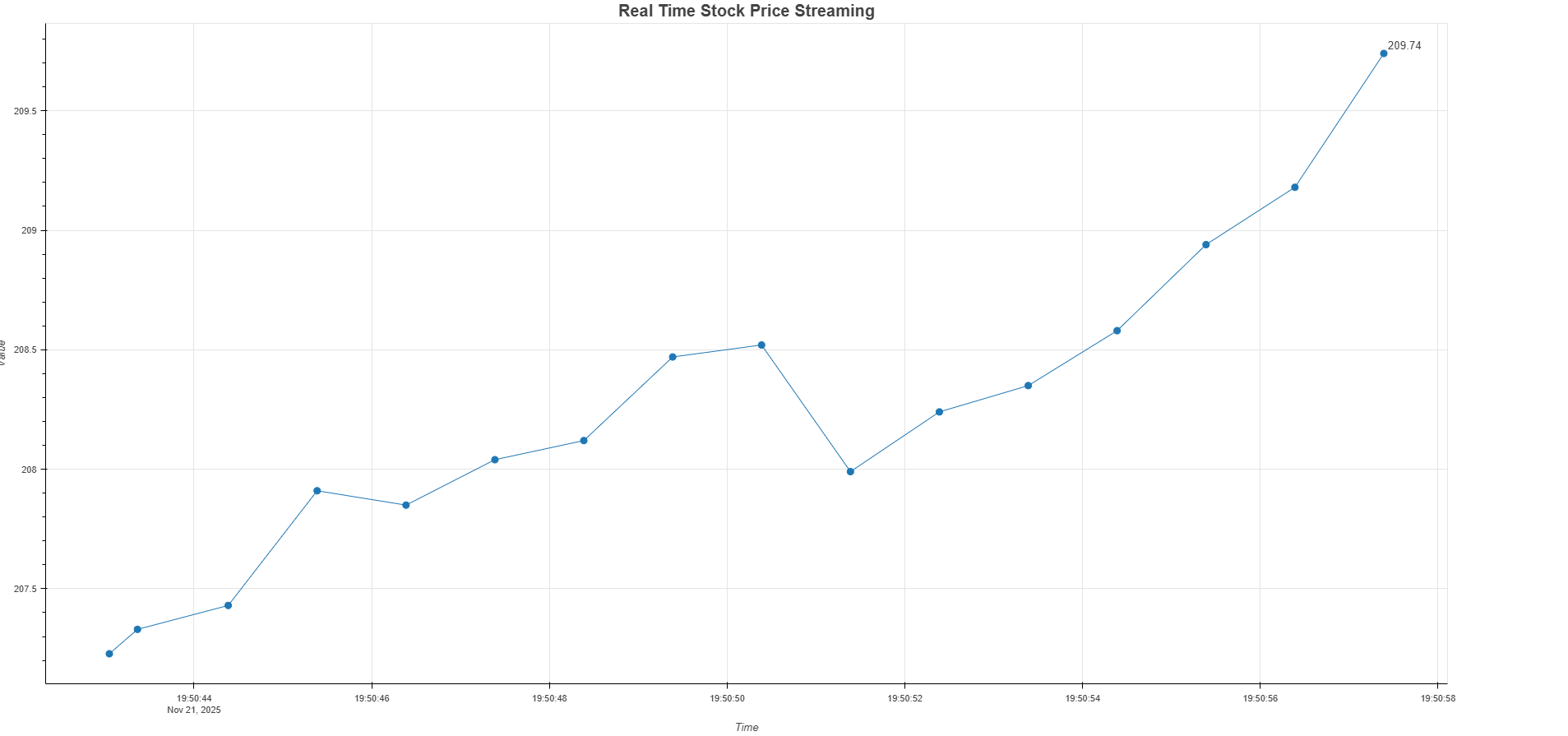
A real time stock price streaming web application built with Python, Bokeh, Bokeh Server, and Docker. First, a Python bokeh interactive visualization is created along with it’s data generation and callback functions. Data generation is simulated using random starting price and random price movements and runs in a separate thread continuously. Each second a new data point is generated and then passed back to the main thread as a stream appending the new value to the original data. The main thread then updates the visualization on the next tic callback. This is all encapsulated by a Python class with its own methods and attributes. Bokeh Server is then used to serve this Python application and acts as a bridge between the client/browser and the backend Python code. We then containarize the appliation using Docker making it portable, scalable, and deployable on any platform.
Try App
Source Code on GitHub


Tableau
Fantasy Football Draftboard

This is more than a draftboard, it is a fantasy football draft optimizer where player rankings are based on value above replacement player. We first obtain NFL statistical projections from multiple sources. We then calculate fantasy points and average it to obtain Player Projected Points. We then compare those projections to a replacement player’s projected points. A replacement player is defined as the “worst” starter given the league’s number of teams and positional requirements settings. For example, a 10 team league with 1 QB starter would mean that for QBs a replacement player would be the 10th highest Player Projected Points as mentioned above(1x10=10). Finally, we summarize these rankings by creating an interactive Tableau dashboard that can be used live on draft day to guide you in making data driven draft decisions.
Try it directly from this site my clicking Try Dashboard below!
NOTE: Projected Points are calculated based on Yahoo’s custom point per reception and carry scoring. Future variations may include the ability to enter custom scoring settings.
Try Dashboard
See my Tableau Public Profile
Fantasy Football Weekly Rankings and Projections

A weekly fantasy football points projection dashboard. Continuing with the same strategy as in our Fantasy Football Draftboard dashboard, we first obtain NFL statistical projections from multiple sources. We then calculate fantasy points by source and average it to obtain Player Projected Points and thus player rankings. Finally, we summarize these findings by creating an interactive Tableau dashboard and updating data on a weekly basis (usually Wednesdays).
Try it directly from this site my clicking Try Dashboard below!
NOTE: Projected Points are calculated based on Yahoo’s custom point per reception and carry scoring. Future variations may include the ability to enter custom scoring settings.
Try Dashboard
See my Tableau Public Profile
Databases
User Management with SQLite
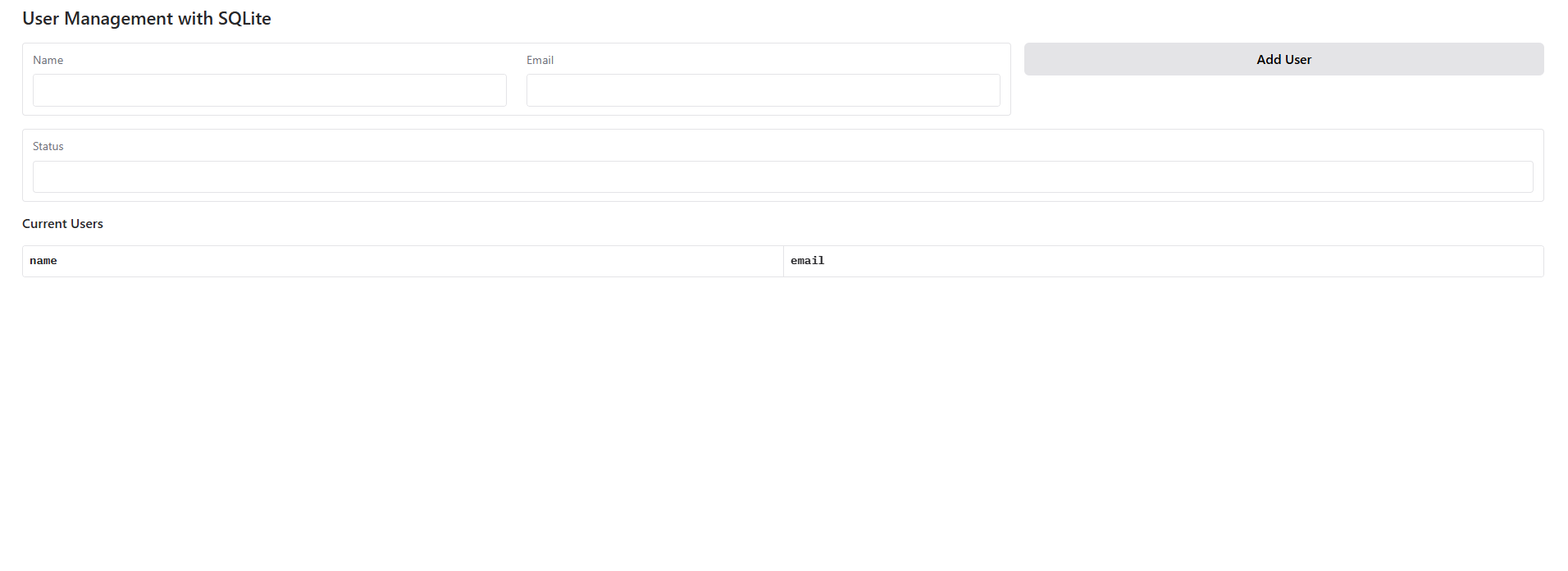
A “User Management” web app using SQLite. In this project we explore database creationg, management, and embedding. First create a simple 1 table database with name and email as columns. We then embedd the database into our Gradio web app and create Python functions with error handling to manage the user creation, query, and status. The app is then deployed to Huggingface spaces and made available as a URL link. Give it a try and create some users by clicking Try App below.
Try App
Source Code on GitHub
AI Agents and Chatbots
Resume Chatbot
For your convenience and fun, I built a Resume AI so that you can chat with my resume directly. A Gradio web app deployed to HuggingFace Spaces powered by Meta-Llama-3.3-70B-Instruct large language model (LLM) and with careful system prompt engineering is able to answer to user’s questions based only on my resume’s content. It is a conversational AI so it will remember your conversation as you chat with it.




Data Analyst AI Agent
A personal Data Analyst Agent built with Meta-Llama-3.3-70B-Instruct LLM and deployed as a Gradio web app to HuggingFace Spaces. Using the ReACT (Reasoning and Action) framework this AI agent thinks, acts, and observes sequentially until the final answer is reached. Using the transformers Python package and their ReactCodeAgent framework, this agent acts and observes with only a Python code interpreter tool.
- Upload data as .csv text file.
- Ask a question or give it a task.
- Hit RUN!
- Watch it think and act using Python code and print outputs!

Image Chatbot
A conversational AI using the open source and SOTA Llava-Next large multimodal model (LMM). With advanced visual reasoning and conversational skills, this AI is capable of summarizing, question answering, and even holding a conversation on any image. Llava-Next is downloaded from Huggingface Hub, loaded to Cuda GPU, and deployed as a Gradio web app on Huggingface’s ZeroGPU technology.